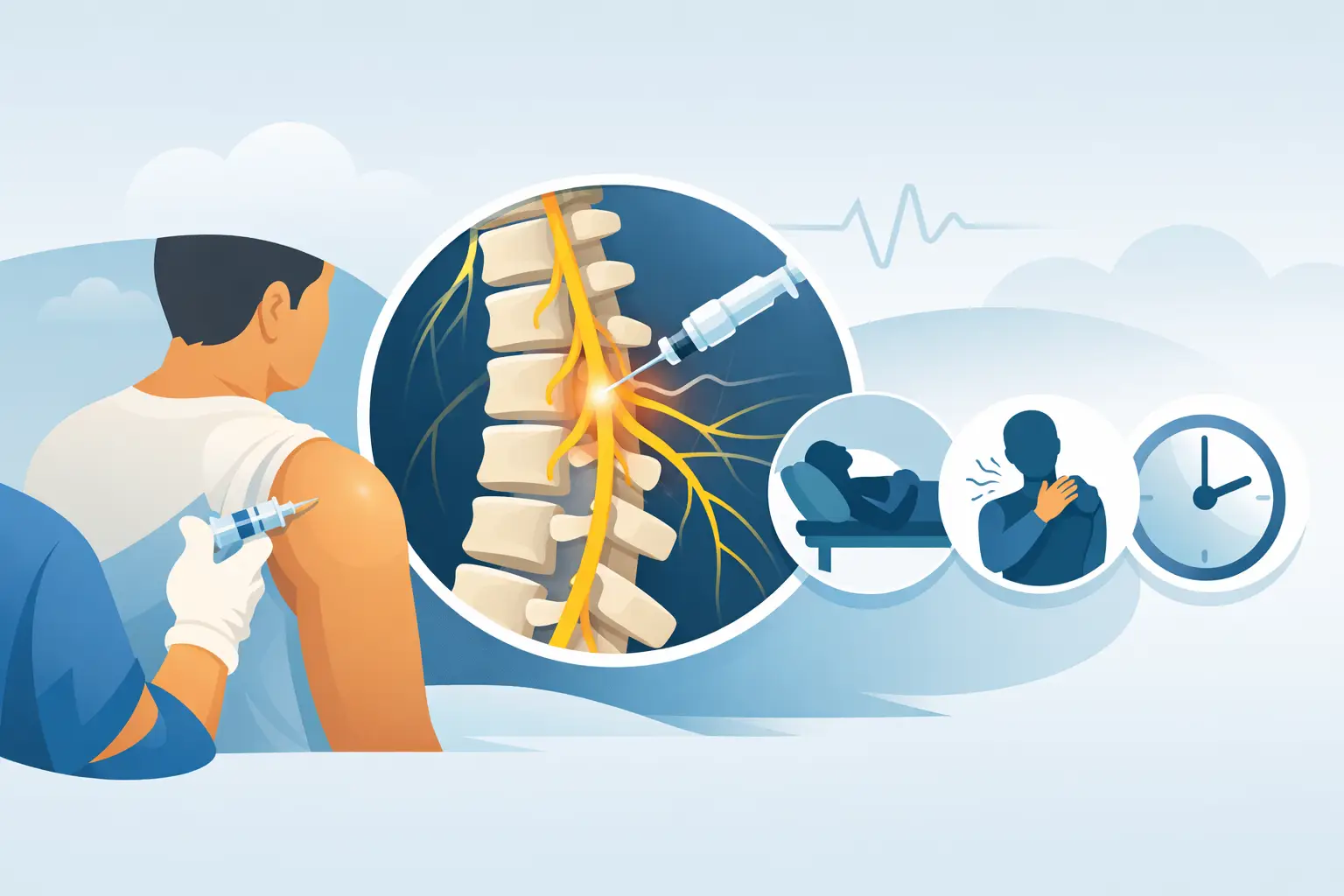
A nerve block can make a painful day-to-day problem feel more manageable, but the hours after your procedure may feel unfamiliar. Knowing what to expect after nerve block treatment helps you plan your day, protect the treated area, and recognize when you need medical guidance.
A nerve block places medication near specific nerves to interrupt pain signals. Depending on your diagnosis and treatment plan, the injection may include a local anesthetic for immediate numbing, an anti-inflammatory medication for longer-lasting relief, or both. The response is personal: some patients notice a major change quickly, while others need several days or more to judge the full benefit.
What to Expect After a Nerve Block in the First Hours
Immediately after the injection, numbness, tingling, heaviness, or temporary weakness near the treated nerve is common. If the block involves a leg, foot, arm, or hand, that limb may not feel or move normally for a while. This is expected while the numbing medication is active, but it also means you should be careful with stairs, hot surfaces, sharp objects, and any activity that requires steady balance.
You may feel some soreness, pressure, or a small bruise at the injection site. This usually comes from the needle itself and often improves within a day or two. A cold pack wrapped in a thin towel can help with tenderness if your care team says it is appropriate for you. Avoid placing ice directly on numb skin, since you may not be able to tell if the skin is getting too cold.
Many patients are advised to have someone drive them home. Sedation is not used for every nerve block, but even without it, numbness or temporary weakness can make driving unsafe. Follow the instructions you received about returning to work, exercise, bathing, and medications, as those recommendations depend on the location of the block and the reason it was performed.
Pain Relief May Not Follow a Straight Line
The local anesthetic may reduce pain within minutes or hours. That early relief is useful information because it can help confirm that the targeted nerve is involved in your symptoms. However, it is often temporary. As the numbing medication wears off, your original pain can return before other medication in the injection begins working.
If your block included an anti-inflammatory medication, improvement may develop gradually over several days. Some people feel better within 24 to 48 hours; others may need a week or two before they can fairly assess the result. A brief pain flare can also happen as the anesthetic fades or as the injection site becomes sore. This does not automatically mean the procedure failed.
The goal is not always to erase every sensation instantly. For many patients, a meaningful result is less pain, better sleep, easier movement, reduced reliance on activity avoidance, or the ability to participate more fully in physical therapy and normal routines. Your provider can help you set a realistic definition of success before treatment.
Why Results Differ From Person to Person
Nerve block outcomes depend on the condition being treated, the nerve involved, the medication used, and how long pain has been present. Pain caused by acute inflammation may respond differently than long-standing pain related to arthritis, injury, scar tissue, or nerve irritation.
The injection is also one part of a larger plan. When appropriate, movement therapy, targeted exercises, medication management, sleep support, and changes to aggravating activities can all affect how long relief lasts. A block can create a valuable window for rebuilding function, rather than serving as a stand-alone answer for every pain condition.
How to Care for Yourself After the Procedure
Plan for a lighter day unless your clinician gives different instructions. Let numbness wear off before testing your usual activity level. It can be tempting to do more because the pain is temporarily quiet, but overdoing it too soon may aggravate the underlying condition.
Use the first few days to notice patterns. Pay attention to when pain returns, what movements feel easier, and whether sleep or daily tasks improve. A simple pain diary can give your provider more useful information than trying to recall every detail at a follow-up visit. Note your pain level, activity, medication use, and any side effects.
Protect the numbed area until normal sensation and strength return. Check your skin for accidental burns, cuts, or pressure marks, especially if the block affected your feet or hands. If you have diabetes, circulation concerns, or reduced sensation before the procedure, ask your care team for specific precautions.
It is also wise to ask before restarting strenuous exercise, lifting, or sports. Some procedures allow a quick return to normal activity; others call for a brief recovery period. The right pace is based on your procedure and your health history, not a one-size-fits-all timeline.
Side Effects That Deserve a Call
Most post-procedure effects are mild and temporary, but you should contact your medical provider if symptoms feel unusual, worsen rather than improve, or do not match the instructions you were given. Seek urgent medical care for severe or rapidly progressing symptoms.
Call your provider promptly if you notice:
- Increasing redness, warmth, swelling, drainage, or fever, which can suggest infection.
- Severe pain at the injection site or pain that is substantially worse than your usual symptoms.
- New weakness, numbness, or loss of bladder or bowel control that does not improve as expected.
- A severe headache, especially one that changes with position, after an injection near the spine.
- Trouble breathing, facial swelling, widespread rash, chest pain, or symptoms of a serious allergic reaction.
Temporary effects from certain anti-inflammatory medications can include flushing, trouble sleeping, a short-term rise in blood sugar, or mood changes. These effects are not guaranteed, and their relevance depends on the medication used and your medical history. Bring up any concerns during your consultation so your treatment can be tailored appropriately.
When to Schedule Follow-Up
Your follow-up matters because it turns your response into a better treatment decision. If you experienced relief, your provider may use that information to refine the diagnosis and discuss next steps. If relief was limited, short-lived, or absent, that is still valuable information. It may indicate that another pain source needs attention or that a different approach is a better fit.
Do not assume you need to simply live with pain because one treatment did not deliver the result you hoped for. Effective pain management is often a process of identifying the pain generator, measuring response, and adjusting the plan with purpose.
At Local Healthcare, patients in Tucson can discuss nerve block treatment in the context of their function, lifestyle, and specific pain goals. The focus is not just on the injection itself, but on helping you move toward more comfortable, capable days.
If pain is keeping you from work, sleep, movement, or the activities you enjoy, use your follow-up conversation to be specific about what needs to change. The right next step starts with a clear picture of how your body responded and what better quality of life looks like for you.