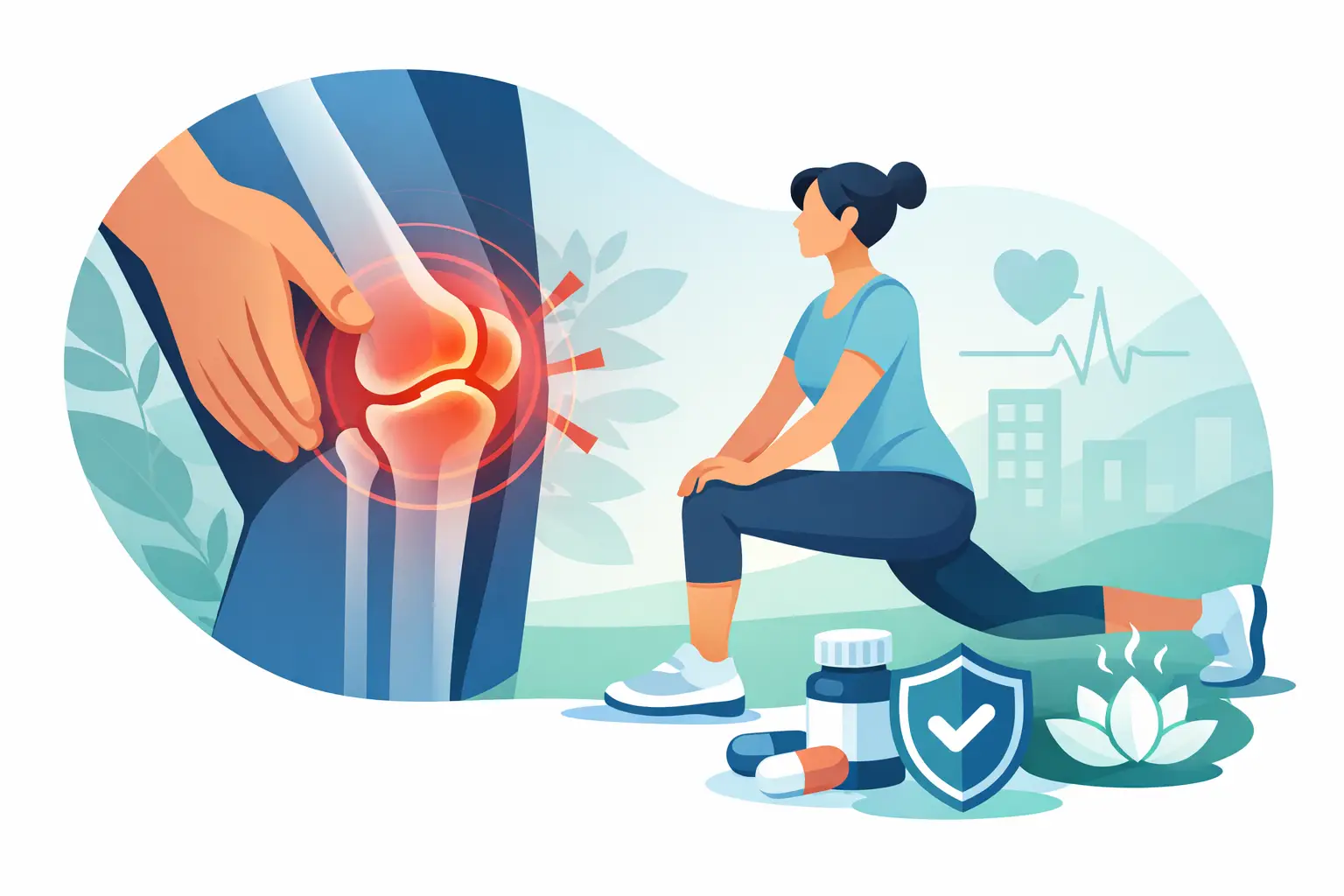
Joint stiffness has a way of shrinking your day. You notice it when you get out of bed, stand up from a chair, or reach for something that used to feel easy. If you are searching for how to relieve joint stiffness, the goal is not just a little temporary comfort. The real goal is to move with less pain, protect the joint, and get back to normal life without guessing your way through it.
Stiffness can come from overuse, inactivity, arthritis, old injuries, inflammation, or simple wear and tear. For some people it shows up after a hard workout or long drive. For others, it is worse first thing in the morning or after sitting too long. That pattern matters because the right solution depends on what is causing the problem.
How to relieve joint stiffness starts with the cause
A stiff joint is not a diagnosis. It is a symptom. Knees, shoulders, hips, hands, and ankles can all feel stiff for different reasons, and treatment works better when it matches the source.
If your joint feels tight but improves as you start moving, mild arthritis or inactivity may be part of the picture. If it becomes stiff after a repetitive task, overuse may be driving the problem. If you also have heat, swelling, or sharp pain, inflammation may be more active. And if the stiffness followed an injury, the joint may need more than home care.
This is where many people lose time. They treat every kind of stiffness the same way. Sometimes that helps, but sometimes it delays real progress. A joint that needs mobility work is different from a joint that needs rest, and both are different from a joint with underlying damage.
Start with gentle movement, not complete rest
One of the most effective answers to how to relieve joint stiffness is controlled movement. That may sound backwards when a joint feels tight, but long periods of rest often make stiffness worse. Joints are designed to move. When they do not, surrounding muscles tighten, circulation slows, and range of motion can shrink.
Gentle motion helps lubricate the joint and wake up the tissues around it. That does not mean pushing through intense pain. It means starting small. A slow walk, light stretching, range-of-motion exercises, or easy cycling can help many people loosen up without aggravating the area.
The key is dosage. Too little movement leaves the joint stiff. Too much, too soon can flare it up. If pain climbs during or after activity and stays elevated, the joint may be telling you to scale back or get evaluated.
Focus on consistency over intensity
People often think they need a hard workout to fix stiffness. Usually, they need consistency more than intensity. Five to ten minutes of gentle movement done every day is often more useful than one aggressive session that leaves the joint irritated.
This matters even more if your stiffness is worst in the morning. A short routine done after waking can make the rest of the day easier. The same goes for stiffness after sitting at a desk or driving for long periods. Frequent movement breaks help more than trying to undo hours of immobility all at once.
Heat can help, but timing matters
Heat is a simple tool that often works well for stiff joints, especially when the problem feels more tight than swollen. A warm shower, heating pad, or warm compress can relax surrounding muscles and make it easier to move.
Heat tends to be most useful before activity or stretching. It prepares the joint for motion. If your knee feels rigid before a walk, or your shoulder is hard to raise overhead, a little heat may help reduce that locked-up feeling.
There is a trade-off here. If the joint is visibly swollen, red, or warm already, heat may not be the best choice. In that case, the issue may be more inflammatory, and cooling the area may feel better. People often benefit from trying both approaches at different times and paying attention to which one actually improves function.
Stretching helps when it is targeted
Stretching gets recommended for almost everything, but random stretches are not the same as effective ones. Joint stiffness often involves the muscles and connective tissue around the joint, not just the joint itself. A stiff hip may be linked to tight hip flexors or glutes. A stiff shoulder may involve the chest, upper back, or rotator cuff.
That is why targeted stretching works better than general stretching. The goal is to improve movement quality, not simply force the joint farther. Stretching should feel controlled and tolerable, not sharp or unstable.
If you are not sure what to stretch, that uncertainty is a good reason to get a medical assessment. The right exercises can improve mobility. The wrong ones can irritate an already sensitive joint.
Strength is part of the fix
Weak muscles put more stress on joints. Over time, that can contribute to both pain and stiffness. This is especially common in the knees, hips, and shoulders. People often avoid strengthening because they assume stiffness means the area is too fragile to use. In reality, many joints feel better when the muscles supporting them are stronger.
This does not mean heavy lifting right away. It means progressive, joint-friendly strengthening that matches your condition and current ability. For one person that might be bodyweight sit-to-stands. For another it might be resistance band work or supervised therapy.
The point is simple. If a joint is not supported well, stiffness tends to return. Lasting improvement usually comes from combining mobility with strength.
Pay attention to inflammation and recovery
Stiffness is sometimes mechanical, but sometimes inflammation is the bigger driver. If your joints feel especially stiff after poor sleep, stress, repetitive use, or a flare of arthritis symptoms, recovery may need more attention.
That includes pacing your activity, staying hydrated, and avoiding the cycle of overdoing it on good days and crashing on the next. It also means noticing patterns. If your hands are stiff every morning for an hour, or your knee swells after basic activity, those details are medically useful.
Over-the-counter options may help some people, but they are not the answer for everyone. Age, medical history, kidney issues, stomach concerns, and medication interactions all matter. If you are relying on pain relievers often just to get through the week, it is time to look deeper instead of managing symptoms alone.
When joint stiffness needs medical care
Some stiffness improves with smart home care. Some does not. If the problem is lasting more than a few weeks, getting worse, limiting your daily activities, or coming with swelling, instability, or loss of range of motion, it deserves a proper evaluation.
This is especially true if the joint catches, locks, gives out, or hurts at night. Those signs can point to structural issues, arthritis progression, tendon problems, or inflammation that needs more than stretching and heat.
A good medical assessment should not stop at telling you to rest. It should clarify what is driving the stiffness, what treatments make sense, and what realistic improvement looks like. For many patients, personalized care creates faster progress because it removes the guesswork.
How to relieve joint stiffness when home care is not enough
When stiffness is interfering with your routine, targeted treatment can make a measurable difference. Depending on the joint and the cause, that may include a focused pain management plan, guided rehabilitation, anti-inflammatory treatment, or image-guided procedures designed to calm pain and improve mobility.
The benefit of medical care is precision. Instead of trying five different home remedies and hoping one works, you can identify the actual source of the problem and treat it directly. That approach often saves time, frustration, and unnecessary suffering.
At Local Healthcare, patients in Tucson and surrounding communities often come in after trying to push through stiffness for months. What they usually want is straightforward – less pain, better movement, and a plan that fits real life. That is exactly where personalized care matters most.
Small daily habits that protect your joints
The best long-term strategy is not one dramatic fix. It is a set of repeatable habits. Change positions often. Warm up before activity. Build strength gradually. Use proper form during repetitive tasks. Do not ignore early symptoms and wait until the joint becomes harder to treat.
Footwear, workstation setup, sleep position, and activity choices can all influence stiffness more than people realize. So can old injuries that never fully healed. None of this means you have to stop being active. It means your joints respond better when activity is structured instead of reactive.
If you have been living around stiffness instead of dealing with it, that is your sign to change course. Relief is often possible, but it works best when the plan fits the reason your joint is stiff in the first place. Better movement starts with paying attention, acting early, and getting help when the problem stops being simple.