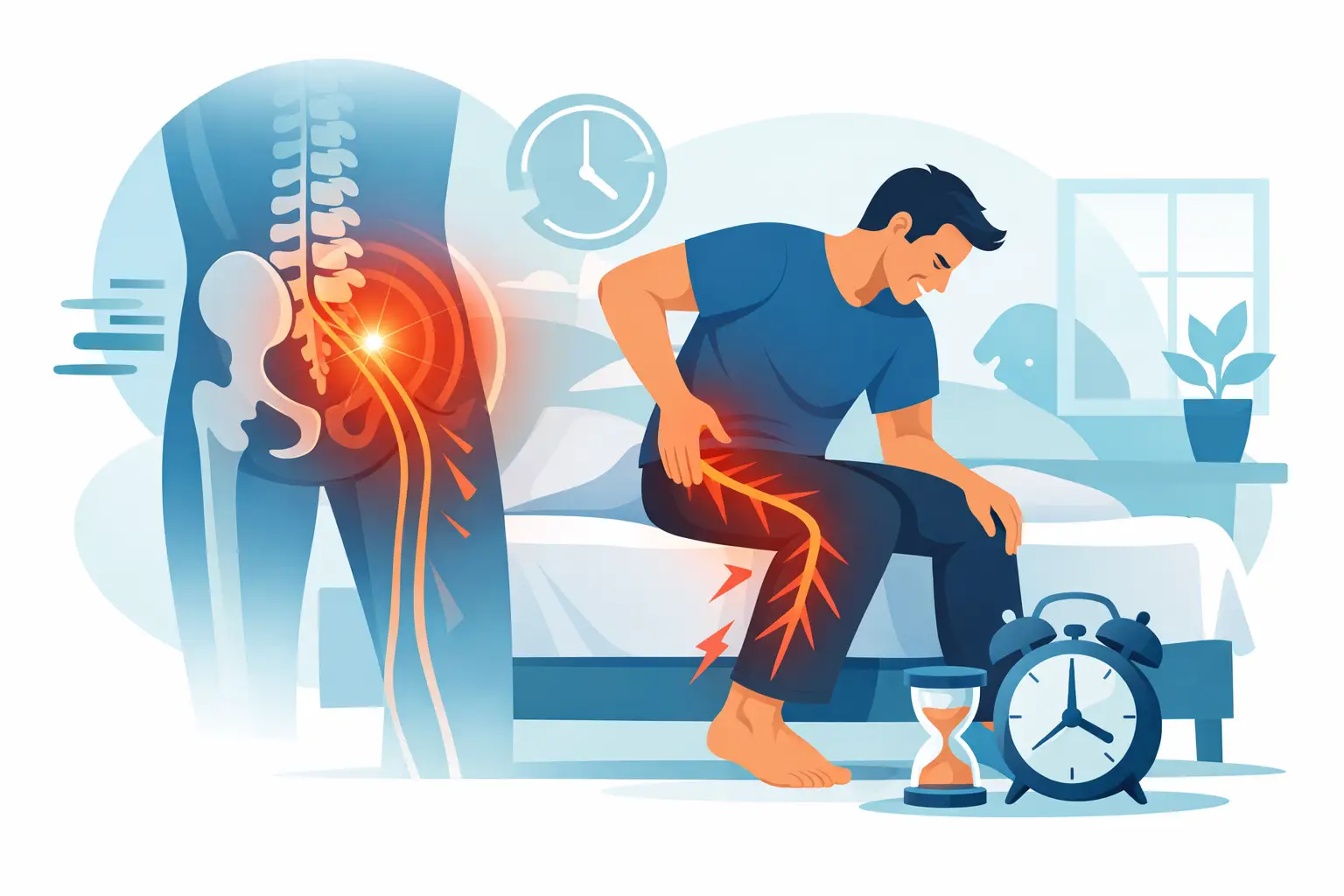
Sciatica has a way of shutting down a normal day without warning. One wrong bend, a long drive, or even a night of poor sleep can turn a manageable ache into sharp pain that runs from your low back into your hip and leg. If you are looking for how to manage sciatica flareups, the goal is not to push through it. The goal is to calm the irritation quickly, protect the nerve, and get back to moving with less pain.
What a sciatica flareup actually means
A flareup usually means the sciatic nerve is being irritated or compressed enough to trigger symptoms beyond simple back pain. You may feel burning, stabbing, tingling, numbness, or weakness that travels down one side. Some people notice it in the buttock first. Others feel it most in the calf or foot.
That pattern matters. Sciatica is not always about the spot that hurts most. The real issue often starts in the lower spine, where a disc problem, inflammation, spinal narrowing, or muscle tension can aggravate the nerve root. That is why massage alone may help some people, while others need a more focused pain management plan.
How to manage sciatica flareups at home
The first 24 to 72 hours are usually about reducing irritation without becoming completely inactive. Total bed rest tends to backfire. Too much movement can do the same. The middle ground is usually best.
Change positions early and often
If sitting makes the pain shoot down your leg, do not stay planted in a chair hoping it will pass. Stand up, walk for a few minutes, and reset your posture. If standing makes symptoms worse, lie down briefly with your knees supported by a pillow. Small changes in position can lower pressure on the irritated nerve.
A common mistake is staying in the exact position that triggered the flareup. Long car rides, desk work, and slouching on the couch are frequent culprits. During a flare, set a timer and change positions every 20 to 30 minutes.
Use ice first, then heat if it helps
Ice can be useful early in a flare, especially if the pain feels hot, sharp, or inflamed. Apply it to the lower back or buttock area for 15 to 20 minutes at a time. After the first day or two, some people respond better to heat because it reduces muscle guarding and stiffness.
There is no prize for choosing one method and sticking with it if it is not helping. Sciatica care is often about response, not theory. If ice gives you relief, use it. If heat helps you move more comfortably, that may be the better option.
Keep walking, but keep it reasonable
Short, easy walks can help prevent stiffness and reduce the cycle of pain and guarding. The keyword is short. A slow five to ten minutes on level ground can be helpful. A long walk when your leg is already numb or weak is different and can make things worse.
Pain that centralizes, meaning it pulls back toward the low back and out of the leg, is often a better sign than pain that spreads farther down. If walking sends symptoms deeper into the calf or foot, scale back and get evaluated.
Be careful with stretching
People often search for a quick stretch to fix sciatica, but aggressive stretching can aggravate an already sensitive nerve. Pulling hard on the hamstring is a common mistake because sciatic pain can feel like a tight hamstring. They are not the same thing.
Gentle movement usually beats force. Light knee-to-chest movements, pelvic tilts, or guided extension-based exercises may help, but it depends on the cause of your flareup. If a stretch increases tingling, shooting pain, or numbness, stop.
Use over-the-counter medication thoughtfully
For some adults, nonprescription anti-inflammatory medication or acetaminophen can take the edge off a flare. This depends on your health history, stomach, kidneys, blood pressure, and any other medications you take. More is not better, and pain relief does not mean the problem is solved.
If you are relying on medication just to get through basic daily activity, or if symptoms keep returning, it is time to look deeper.
When a flareup needs medical attention
Some sciatica episodes settle down with conservative care. Others keep coming back because the underlying problem has not been addressed. A pattern of repeated flareups is a reason to get evaluated, not just something to tolerate.
Red flags you should not ignore
Sciatica can usually wait for a prompt office visit, but a few symptoms need urgent medical attention. Loss of bowel or bladder control, severe or rapidly worsening leg weakness, numbness in the groin area, or pain after a significant fall or accident should not be managed at home.
Less dramatic but still important signs include persistent numbness, foot drop, pain that wakes you repeatedly at night, or symptoms that are not improving after a couple of weeks. Those issues may point to a more significant nerve compression or another condition that needs diagnosis.
Why sciatica keeps flaring up
Many patients are frustrated because the pain seems random. Usually, it is not random. There is often a mechanical pattern behind it.
A disc bulge may be irritated by bending, lifting, twisting, or prolonged sitting. Spinal stenosis may feel worse when standing or walking upright for too long. Piriformis-related irritation can be affected by posture, overuse, or sitting pressure. The right treatment depends on which pattern fits your symptoms, exam findings, and sometimes imaging.
This is where personalized care matters. Two people can both say they have sciatica and need very different treatment plans.
Professional treatment options for sciatica flareups
If home care is not enough, a targeted medical plan can shorten recovery time and reduce the chance of the next flare. That starts with figuring out what is driving the pain, not just masking it.
Physical medicine and guided rehab
A structured movement plan can improve mobility, reduce nerve irritation, and build support around the lower back and hips. The right exercises are specific. One patient may need extension-based work. Another may need core stabilization, hip mobility, or posture correction.
Generic internet exercises are hit or miss. Guided rehab is more useful when symptoms are strong, recurring, or tied to clear movement triggers.
Interventional pain management
When inflammation around a nerve root is a major driver, targeted injections may help reduce pain and improve function. These are not the answer for every patient, but for the right candidate, they can create enough relief to move better and participate in rehab.
This is especially important when pain is interfering with sleep, work, or routine walking. Lasting improvement usually comes from pairing symptom relief with a plan to address the cause.
Imaging and further evaluation
Not every flareup needs an MRI right away. But if symptoms are severe, persistent, or associated with weakness or numbness, imaging may help confirm whether a disc issue, stenosis, or another spinal problem is involved.
Good care is not about ordering every test on day one. It is about knowing when more information will change the treatment plan.
How to reduce future sciatica flareups
Most people want more than short-term pain relief. They want fewer bad days and more confidence in daily life. That usually means changing the conditions that keep irritating the nerve.
Start with the basics that matter most. Limit long periods of sitting. Improve your workstation or driving posture. Learn safer bending and lifting mechanics. Build strength in the core and hips. Stay active enough to keep the back from stiffening, but avoid the boom-and-bust cycle of doing too much on good days and paying for it later.
Sleep setup can matter too. Some patients do better on their side with a pillow between the knees. Others get relief on their back with support under the knees. Small changes are not glamorous, but they can make a real difference when repeated every day.
If your symptoms keep returning, recurring flareups are your signal that self-management alone is not enough. For patients in Tucson and nearby communities, working with an experienced pain management team can help identify the cause, calm the current flare, and build a plan that protects your quality of life.
The biggest mistake during a flare
The biggest mistake is waiting too long while hoping severe nerve pain will simply work itself out. Some soreness improves with time. Ongoing radiating pain, numbness, or weakness deserves more attention.
The better approach is simple. Settle the flare, stay gently mobile, avoid movements that clearly worsen symptoms, and get evaluated if the pain is intense, recurrent, or changing your ability to function. Relief matters, but so does getting the right diagnosis. When you know what is actually driving the pain, treatment gets more precise and daily life gets easier again.
A sciatica flareup can make your world feel very small for a few days or a few weeks. The right care should do the opposite – reduce pain, restore movement, and give you a clear path forward.