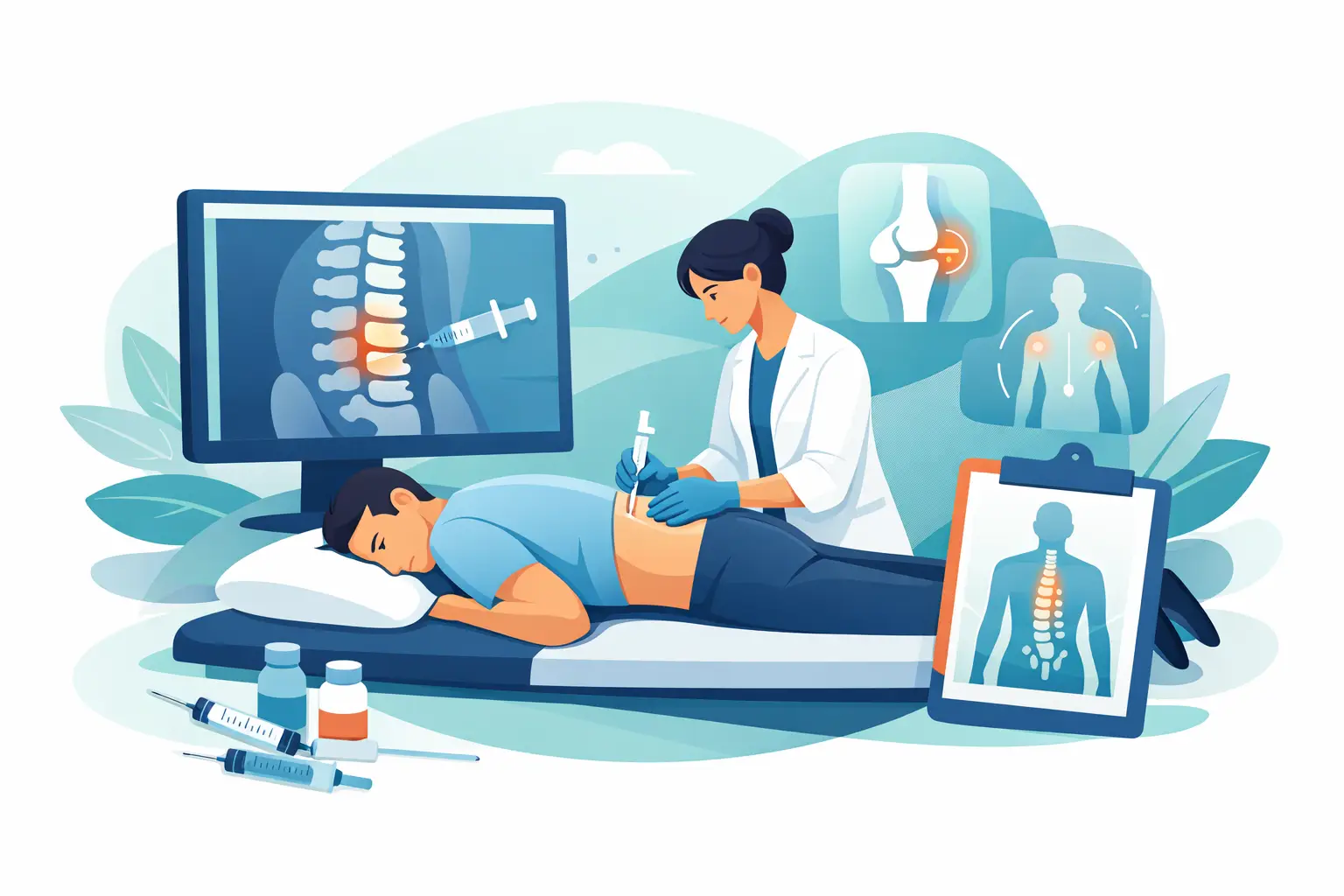
When pain starts shaping your schedule, your sleep, and even how long you can stand in the grocery line, you want real options – not vague promises. This guide to outpatient pain procedures is built for adults who want to understand what these treatments do, how they work, and whether they may help reduce pain without a hospital stay.
Outpatient pain procedures are done in a clinic or surgical suite, then you go home the same day. For many people, that means less disruption, faster recovery, and a more practical path forward than waiting until pain becomes unbearable. It also means treatment can be tailored with more precision, especially when the goal is to calm a specific nerve, joint, or area of inflammation.
What outpatient pain procedures actually treat
Most people do not walk in asking for a procedure. They come in because their back still hurts after physical therapy, their neck pain keeps triggering headaches, or their knee pain flares every time they try to stay active. The procedure is not the starting point. The problem is.
Outpatient pain procedures are commonly used for low back pain, neck pain, sciatica, joint pain, arthritis-related inflammation, nerve pain, and pain that continues after an injury or surgery. Some are also used to help confirm where pain is coming from. That matters because the right diagnosis often changes the right treatment.
A patient with leg pain, for example, may assume the knee is the issue when the real source is a compressed nerve in the lower back. Someone with shoulder discomfort may actually have pain referred from the neck. Good pain management is not about chasing symptoms. It is about identifying the pain generator and treating it directly when possible.
A practical guide to outpatient pain procedures
The phrase covers several different treatments, and they are not interchangeable. Each one has a different purpose, timeline, and expected result.
Epidural steroid injections
These are commonly used when inflamed spinal nerves cause back pain, neck pain, or pain that radiates into the arms or legs. The medication is placed near the irritated nerve root to reduce inflammation and calm symptoms.
Some patients feel relief within days. For others, it takes longer, and the improvement may be partial rather than dramatic. That does not always mean the treatment failed. In some cases, reducing pain enough to improve sleep, movement, and participation in physical therapy is a meaningful win.
Facet joint injections and medial branch blocks
Facet joints are small joints in the spine that can become painful from arthritis, wear and tear, or injury. Injections into or around these joints can help determine whether they are a true pain source and may also provide relief.
Medial branch blocks are often diagnostic first. If pain improves significantly after the block, that information can point toward a longer-lasting option such as radiofrequency ablation.
Radiofrequency ablation
This procedure uses heat generated by radio waves to interrupt pain signals from certain nerves, most often around the facet joints in the neck or low back. It does not cure arthritis or reverse degeneration, but it may provide longer relief than a temporary injection.
The trade-off is timing. Relief is not usually immediate, and the treated nerves can eventually regrow. For the right patient, though, it can mean months of reduced pain and better function.
Joint injections
Shoulders, knees, hips, and sacroiliac joints can all become painful from inflammation or degeneration. Image-guided injections may help reduce irritation within the joint and improve mobility.
This is where expectations matter. A joint injection may reduce inflammation, but it will not rebuild cartilage or fix advanced structural damage. It can still be useful when the goal is to stay active, postpone more invasive treatment, or get through a painful flare with better control.
Trigger point injections
Not all pain comes from nerves or joints. Tight, irritated muscle bands can create local pain or referred pain patterns that feel deeper than they are. Trigger point injections are used to release these areas and reduce muscle-related pain.
These may be part of a broader plan rather than a stand-alone solution. If posture, overuse, stress, or biomechanics keep feeding the same muscle tension, the benefit may be temporary unless those factors are addressed too.
What to expect before and during treatment
A good procedure starts with a good evaluation. That usually includes a detailed history, physical exam, and often a review of imaging such as X-rays or MRI. The goal is not to order a procedure quickly. The goal is to match the treatment to the pattern of pain.
Before the appointment, you may be asked about blood thinners, diabetes, allergies, prior surgeries, and whether you have had reactions to contrast dye or steroid medication. These details matter because safety is not one-size-fits-all.
On the day of the procedure, most treatments are brief. The area is cleaned, local anesthetic may be used, and imaging guidance such as fluoroscopy or ultrasound helps place medication accurately. Some patients receive light sedation, while others do well without it. After a short observation period, you usually go home the same day.
That same-day discharge is one reason many patients prefer outpatient care. It is more convenient, but convenience should never replace accuracy. The value comes from getting the right treatment in the right place with the right follow-up.
Recovery and results – what is realistic
One of the biggest frustrations in pain care is hearing that a procedure “worked” without anyone defining what that means. Relief can show up in different ways. Pain may decrease, flare-ups may become less frequent, walking tolerance may improve, or sleep may stop being interrupted every night.
Some procedures provide short-term relief. Others can last much longer. It depends on the condition, the technique used, the severity of the underlying problem, and how your body responds. A patient with a newly irritated nerve may respond very differently than someone with long-standing spinal arthritis and multiple pain sources.
It also depends on what happens after the procedure. If treatment gives you a window of lower pain, that may be the right time to rebuild strength, improve mobility, and change habits that keep aggravating the area. Procedures often work best as part of a plan, not as the whole plan.
Mild soreness for a day or two is common. You may be asked to take it easy briefly, monitor how your pain changes, and keep notes on relief levels. That feedback helps guide the next step. In a clinic focused on personalized pain care, your response is not treated as random. It is part of the diagnostic process.
Who may be a good candidate
The best candidates for outpatient pain procedures are not always the people in the most severe pain. They are the people whose symptoms, exam, and imaging point toward a targetable source.
You may be a good candidate if your pain has not improved enough with medication, activity modification, or therapy, and there is a reasonable chance a procedure can reduce inflammation or interrupt pain signaling. You may also be a candidate if surgery is not appropriate, not desired, or not necessary at this stage.
That said, not every patient should move straight to an injection or nerve procedure. If the diagnosis is unclear, if symptoms suggest a more urgent issue, or if the likely benefit is low, a trustworthy provider should say so. Good care is not about doing more. It is about doing what makes sense.
Questions worth asking before you book
If you are comparing clinics, ask how they determine which procedure fits your pain pattern, whether imaging guidance is used, what side effects are most common, and what the next step is if the first treatment only helps partly. Those answers tell you a lot.
You should also ask how success is measured. Pain scores matter, but so do daily function, sleep, activity level, and whether treatment helps you get back to work, exercise, or normal routines. A results-oriented clinic should be able to speak clearly about all of that.
For patients in Tucson and nearby communities, convenience matters, but confidence matters more. You want a team that explains things in plain language, respects your time, and builds a plan around your life rather than forcing you into a generic treatment track.
At Local Healthcare, that patient-first approach is what makes specialty pain care feel different from a rushed medical visit. The goal is simple: identify the source, use the least invasive option that fits, and help you move better with less pain.
If pain has been limiting what you can do, the right next step is not guessing. It is getting a clear evaluation and a treatment plan that gives you a real chance to feel like yourself again.