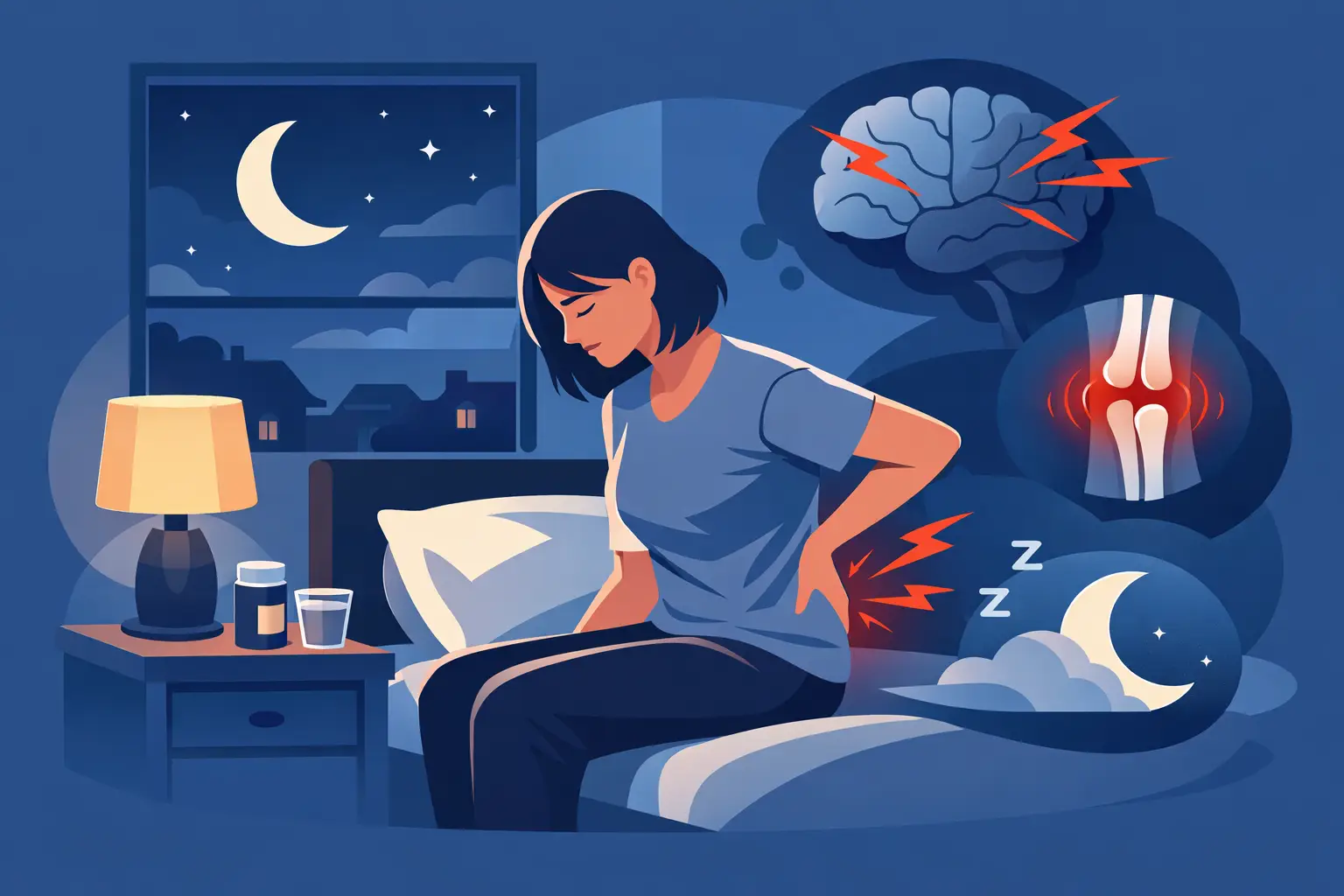
Pain that stays manageable during a busy day can feel impossible once the house is quiet. If you have asked, why does pain worsen at night, you are not imagining it. Nighttime pain is common with back problems, arthritis, nerve irritation, injuries, and several other conditions. Less movement, fewer distractions, sleep position, and changes in how the body processes pain can all make symptoms more noticeable after dark.
The goal is not simply to get through another restless night. Finding the reason behind your pattern of pain can help you protect your sleep, stay active, and pursue treatment that improves your quality of life.
Why does pain worsen at night for so many people?
Pain is not always more severe at night in a physical sense. Sometimes it is simply harder to ignore. During the day, work, conversation, errands, and movement compete for your attention. At night, there is less external stimulation. Your brain has more room to focus on the ache in your hip, the burning in your leg, or the stiffness in your lower back.
That said, nighttime discomfort can also reflect real changes in your body. Staying in one position for hours can increase joint pressure, tighten muscles, or irritate sensitive nerves. A mattress that does not support your body well can add strain, especially if you already have spinal, shoulder, or hip pain.
Your body also follows a daily rhythm. Inflammation, body temperature, and the natural chemicals involved in pain regulation can vary throughout the day and night. The result is that symptoms from an underlying condition may become more noticeable when you are trying to rest.
Common reasons for nighttime pain
Arthritis and joint inflammation
Arthritis pain often becomes more noticeable after periods of inactivity. When you lie still, joints may stiffen and surrounding tissues can become less flexible. This is especially common in the knees, hips, hands, shoulders, and spine.
Your sleep position matters. Side sleeping can place direct pressure on a painful shoulder or hip, while sleeping with knees fully extended may aggravate some forms of knee or low-back discomfort. A few thoughtful adjustments, such as a pillow between the knees or under them, may reduce pressure. But if joint pain regularly wakes you up, it deserves more than a pillow solution.
Back pain, disc problems, and muscle tension
Lower back pain can worsen at night because the spine stays in one position for too long. Some people feel worse lying flat, while others experience more discomfort when curled tightly on their side. A strained muscle may also tighten after a day of activity and then protest when movement slows down.
Disc-related pain can be more complicated. Certain positions may increase pressure in the spine or aggravate nearby nerves. Pain may travel into the buttock, leg, or foot, sometimes with tingling, numbness, or weakness. Those symptoms are useful clues during a medical evaluation because they can point to nerve involvement rather than a simple muscle strain.
Nerve pain
Nerve pain is often described as burning, electric, stabbing, or pins-and-needles sensations. It may worsen at night because there are fewer distractions, but pressure from bedding or a particular position can also trigger it. In some cases, even light contact with sheets can feel uncomfortable.
Nerve-related symptoms should not be dismissed as something you simply need to tolerate. The right treatment depends on where the nerve is irritated and why. A personalized plan may include targeted procedures, medication management, physical rehabilitation, or a combination of approaches.
Injury recovery and overuse
An old injury can remind you it is still there after a long day on your feet. Tendons, muscles, ligaments, and joints may become irritated with repeated activity, then ache once you finally stop moving. This pattern is common with shoulder injuries, knee pain, neck strain, and foot or ankle conditions.
Rest can help, but complete inactivity is not always the answer. Too much time without movement may increase stiffness. The right balance depends on the injury, your activity level, and whether pain is improving or getting worse.
Circulation, swelling, and pressure changes
Leg discomfort that builds late in the day may be related to swelling, circulation concerns, or prolonged standing and sitting. Elevating the legs can help some people, but it is not appropriate to assume every type of leg pain has the same cause.
Pain that feels like cramping, throbbing, heaviness, or swelling should be evaluated in context. One-sided swelling, warmth, redness, or sudden pain requires prompt medical attention, particularly if it is new.
Sleep posture can make a meaningful difference
Your mattress and pillow cannot cure a medical condition, but they can either reduce or add to the stress on painful areas. A mattress that sags may allow the spine to twist. One that is excessively firm may increase pressure on the shoulders and hips. There is no single best mattress for every patient, because comfort depends on body shape, sleep position, and the source of pain.
For back pain, many people do well on their side with a pillow between the knees, or on their back with a pillow beneath the knees. For shoulder pain, avoid lying directly on the affected side when possible and support the top arm with a pillow. If hip pain is the issue, a pillow between the thighs may help keep the pelvis in a more neutral position.
Small changes are worth trying for a few nights, but do not keep replacing pillows and mattresses while persistent pain goes unexplained. If sleep disruption continues, the focus should shift to identifying the cause.
Practical steps to reduce pain before bed
A consistent evening routine can reduce the transition from daytime activity to nighttime stiffness. Gentle movement is often more useful than collapsing straight into bed. A brief walk, light stretching approved for your condition, or a warm shower may help loosen tight muscles and joints.
Heat can be soothing for muscle tension and stiffness, while cold may help after an active day if an area feels swollen or inflamed. Use either carefully, protect your skin, and avoid falling asleep with a heating pad or ice pack in place.
It can also help to pace your day. If pain predictably spikes at night after long periods of standing, lifting, yard work, or sitting, breaking those activities into shorter intervals may reduce the evening flare. Track where the pain occurs, what it feels like, what makes it better or worse, and whether it wakes you at the same time each night. Those details can make a medical visit more productive.
When nighttime pain needs medical attention
Pain that keeps you from sleeping is a valid reason to seek care, especially when it lasts more than a few weeks, becomes more intense, or limits your ability to work, exercise, or handle daily tasks. You do not need to wait until pain becomes unbearable to ask for help.
Some symptoms call for urgent evaluation. Seek prompt medical care for severe or sudden pain after an injury, new weakness, loss of bowel or bladder control, numbness in the groin area, fever with significant back pain, unexplained weight changes, chest pain, shortness of breath, or a swollen and painful leg. These symptoms do not always indicate a serious condition, but they should not be managed at home without guidance.
A thorough pain evaluation looks beyond the place that hurts. It considers your medical history, movement patterns, sleep habits, prior injuries, imaging when appropriate, and how pain affects your life. That broader view helps avoid one-size-fits-all care.
Personalized pain care can help you sleep again
The best treatment for nighttime pain depends on its source. Some patients need a focused plan for arthritis or spinal pain. Others benefit from addressing nerve irritation, movement limitations, medication concerns, or an injury that never fully recovered. Effective care should be built around your symptoms, goals, and response to treatment, not just a label on a chart.
At Local Healthcare, patients in Tucson can pursue an individualized approach to pain management designed to support meaningful, sustainable improvement. Better sleep is not a minor luxury. It affects energy, mobility, mood, and your ability to enjoy daily life.
If pain is regularly taking over your nights, listen to what that pattern is telling you. A clear diagnosis and a focused treatment plan can be the next step toward quieter evenings and more capable days.